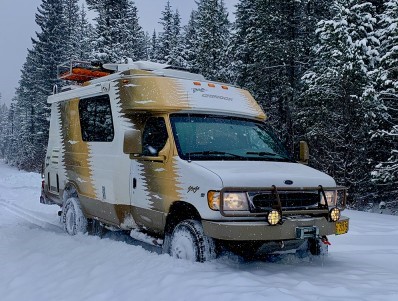
How much air pressure and what valve stems 1998 concourse
How much air pressure and what valve stems 1998 concourse
Just checkin everything out for first time on tires. How much air is everyone running? It seems to be all over the board on things I read. I have 58# all the way around right now. Also one set of my rear wheels has some nice extensions on the valve stems but the other side I cannot reach anything. If I am going to have to buy something what does everyone suggest. The side that has them has a metal braided extension from the inside wheel and the outside has a curved piece of brass tubing looking extension which makes it nice also. I went to 3 tire shops today and nobody had anything I needed. Please advise!! Thanks
1998 Concourse V-10 Triton....AKA...Land Shark
Re: How much air pressure and what valve stems 1998 concourse
you are safe at 58#
I prefer 65 front and 55 rear.
Do not use the braided valve extensions as they are prone to developing leaks. Use solid Valve stems like these which are currently on sale. You must have them installed, but they eliminate a roadside repair from using extensions.
https://www.campingworld.com/dl4-dually ... PaEALw_wcB##
I prefer 65 front and 55 rear.
Do not use the braided valve extensions as they are prone to developing leaks. Use solid Valve stems like these which are currently on sale. You must have them installed, but they eliminate a roadside repair from using extensions.
https://www.campingworld.com/dl4-dually ... PaEALw_wcB##
1997 Chinook Concourse, over 200,000 Miles
Re: How much air pressure and what valve stems 1998 concourse
Just curious and thanks for your help. Why are you running those air pressures? I am a newbie to Rving but have been a mechanic for years. The Camping world kit you refered to is for chevys. Do I have to order specifically a set for ford? I want to get all this right on tires before our first trip. Thanks again for the help.
1998 Concourse V-10 Triton....AKA...Land Shark
Re: How much air pressure and what valve stems 1998 concourse
One more note:...I am only running 16 inch wheels. Will they work on wheels that small?
1998 Concourse V-10 Triton....AKA...Land Shark
Re: How much air pressure and what valve stems 1998 concourse
Flame, click Quick links, search, and type Valve Stems. Youll find additional info and more discussion on this topic.
Why do I run those pressures? As a mechanic you should know that tire pressures change the weight capacity of a tire. My pressures are safely above the weight needs of each axle, the rear pressures provides a comfortable ride for my guests, and the front provides best handling.
Why do I run those pressures? As a mechanic you should know that tire pressures change the weight capacity of a tire. My pressures are safely above the weight needs of each axle, the rear pressures provides a comfortable ride for my guests, and the front provides best handling.
1997 Chinook Concourse, over 200,000 Miles

Re: How much air pressure and what valve stems 1998 concourse
As mentioned, there are some good threads on this, with photos and illustrations and etc.
In summary here is what I do:
1) Yep, I have stock 16" Ford steel wheels - no problem.
2) I have Tireman brand completely rigid extended stems on all six wheels (actually on the spare too). Borg also makes essentially the same thing (Tireman are brass, Borg are silver, I would imagine plated brass). These are a one piece solid metal stem that goes right from the rim to the valve - no extension. They are bent so that you can easily reach them all just as if you did not have duallies. They basically don't leak any air, nor are they prone to trouble.
3) You should set the pressure according to the weight on each axle (total axle weight divided by number of tires, then all tires on each axle the same pressure). I have posted a chart in one of the other threads that works for most LT225-75/16 tires as came stock on our Ford E-350's.
You will notice that the tire sidewall says you can go up to 80#. As the chart shows that's if you have the tires maxed out. We don't (unless we are grossly overweight). So inflating to that would be an extra harsh ride and hard on the tires too (wear). Then often the door jamb gives a pressure recommendation. This is only their best guess since they don't know how much *your* rig will end up weighing. Better than just throwing in 80# but still not ideal. So best is to take your rig to a scale for a baseline weight, loaded as you would for typical travel. This is good info to have anyway. Then inflate accordingly (using the chart).
BG
PS: You *can* mount the extended stems yourself - I did on my front wheels after buddy had Discount muff his up (and Tireman had retired). But you have to have the tire bead broken to get in there. I had bought new front rims so it was easy as I had bare rims in front of me. If you have someone else do it, it's not so much a matter of skill as it is of making sure they follow the instructions for lining up the stem, using locktite, etc.
In summary here is what I do:
1) Yep, I have stock 16" Ford steel wheels - no problem.
2) I have Tireman brand completely rigid extended stems on all six wheels (actually on the spare too). Borg also makes essentially the same thing (Tireman are brass, Borg are silver, I would imagine plated brass). These are a one piece solid metal stem that goes right from the rim to the valve - no extension. They are bent so that you can easily reach them all just as if you did not have duallies. They basically don't leak any air, nor are they prone to trouble.
3) You should set the pressure according to the weight on each axle (total axle weight divided by number of tires, then all tires on each axle the same pressure). I have posted a chart in one of the other threads that works for most LT225-75/16 tires as came stock on our Ford E-350's.
You will notice that the tire sidewall says you can go up to 80#. As the chart shows that's if you have the tires maxed out. We don't (unless we are grossly overweight). So inflating to that would be an extra harsh ride and hard on the tires too (wear). Then often the door jamb gives a pressure recommendation. This is only their best guess since they don't know how much *your* rig will end up weighing. Better than just throwing in 80# but still not ideal. So best is to take your rig to a scale for a baseline weight, loaded as you would for typical travel. This is good info to have anyway. Then inflate accordingly (using the chart).
BG
PS: You *can* mount the extended stems yourself - I did on my front wheels after buddy had Discount muff his up (and Tireman had retired). But you have to have the tire bead broken to get in there. I had bought new front rims so it was easy as I had bare rims in front of me. If you have someone else do it, it's not so much a matter of skill as it is of making sure they follow the instructions for lining up the stem, using locktite, etc.
1999 Concourse
Re: How much air pressure and what valve stems 1998 concourse
Flame,
I don't have them installed, but have looked into them. For Borg, with our stock wheels and tire size, I think this link is the kit you'd probable want (notice it is for Ford E350-E450 1992-2007). You might find it cheaper somewhere else, I don't know. The difference between kits can be the length and/or bends in the stems, or the size/shape of the Wheel Stabilizers (rubber grommets that go in one of the spokes of the wheel to hold the stem coming from the inner tire solidly in the middle of the hole - that's why there are additional images of the wheel, to show what type of spokes it has, in this case 2" and round, not oval).
http://yourtireshopsupply.com/product/7 ... ms-dl1ecfr
Blue~Go,
I would add to your tire pressure info, in that the characteristics of the tire must also be taken into account - e.g. size and stiffness of the sidewall. My first tires had very stiff sidewalls and drove well at 62 front/58 rear. But then I got some BF Goodrich All-Terrain T/A KO's and had a horribly wobbly/unstable feeling ride until I aired them up to 72 front/66-68 rear. Nothing else changed in the vehicle at that time, just those new tires. Took me a few weeks before I thought to try higher pressures, and now I like the ride.
Thanks,
Bob
I don't have them installed, but have looked into them. For Borg, with our stock wheels and tire size, I think this link is the kit you'd probable want (notice it is for Ford E350-E450 1992-2007). You might find it cheaper somewhere else, I don't know. The difference between kits can be the length and/or bends in the stems, or the size/shape of the Wheel Stabilizers (rubber grommets that go in one of the spokes of the wheel to hold the stem coming from the inner tire solidly in the middle of the hole - that's why there are additional images of the wheel, to show what type of spokes it has, in this case 2" and round, not oval).
http://yourtireshopsupply.com/product/7 ... ms-dl1ecfr
Blue~Go,
I would add to your tire pressure info, in that the characteristics of the tire must also be taken into account - e.g. size and stiffness of the sidewall. My first tires had very stiff sidewalls and drove well at 62 front/58 rear. But then I got some BF Goodrich All-Terrain T/A KO's and had a horribly wobbly/unstable feeling ride until I aired them up to 72 front/66-68 rear. Nothing else changed in the vehicle at that time, just those new tires. Took me a few weeks before I thought to try higher pressures, and now I like the ride.
Thanks,
Bob
Re: How much air pressure and what valve stems 1998 concourse
I am currently on my second set of Michelins...the one's I have now are the new Defender 225/75/R16. When you are getting new tires, be sure to specify/check the manufacturing date...even if you still have decent treadwear, I've read and been advised that tires begin to seriously degrade after 8 years.
I agree with others who caution against using the braided valve extensions for the duallies. I had them at first and they did leak. Based on information gleaned from this forum, I had solid stems (Duellyvalve Kit fitted for my 2004 Ford E-350 Super Duty Chassis) installed by my local Ford dealer when I purchased my new tires. The wheel simulators (hubcaps) I have on the rear are the one's with oval holes for the stems to come through needed to be "dremeled out" just a bit to allow for the centering of the new stems in the hole, but that was easy to do myself. I also cut a small piece of clear plastic tubing that I sized to fit right over the valve stem itself to protect it from the sharp edge of the wheel simulator hole, just in case it rotated a bit (happy to report that has not happened...but wanted to be be safe).
I also recommend getting all wheels Road Force Dynamic Balanced rather than regular balancing. It is well worth the extra money in that the smoothness of the ride is really noticeable. I can cruise the interstate (most interstates) at 75 with hardly any vibration.
As for tire pressure, I have experimented with pressures between 55-65 to varying degrees front and back and settled on 60 all around for my rig as it is configured with two electric assist bikes (42 lbs. each mounted on a front rack, a 200 watt solar suitcase (40 lbs) mounted on the rear bumper in front of the Continental Spare, and two dry bags used to store extra gear mounted on the ladder (another 30 lbs. maybe). I am not an engineer, and my tire pressure preference is simply based on what I like for comfort of ride and handling.
David
I agree with others who caution against using the braided valve extensions for the duallies. I had them at first and they did leak. Based on information gleaned from this forum, I had solid stems (Duellyvalve Kit fitted for my 2004 Ford E-350 Super Duty Chassis) installed by my local Ford dealer when I purchased my new tires. The wheel simulators (hubcaps) I have on the rear are the one's with oval holes for the stems to come through needed to be "dremeled out" just a bit to allow for the centering of the new stems in the hole, but that was easy to do myself. I also cut a small piece of clear plastic tubing that I sized to fit right over the valve stem itself to protect it from the sharp edge of the wheel simulator hole, just in case it rotated a bit (happy to report that has not happened...but wanted to be be safe).
I also recommend getting all wheels Road Force Dynamic Balanced rather than regular balancing. It is well worth the extra money in that the smoothness of the ride is really noticeable. I can cruise the interstate (most interstates) at 75 with hardly any vibration.
As for tire pressure, I have experimented with pressures between 55-65 to varying degrees front and back and settled on 60 all around for my rig as it is configured with two electric assist bikes (42 lbs. each mounted on a front rack, a 200 watt solar suitcase (40 lbs) mounted on the rear bumper in front of the Continental Spare, and two dry bags used to store extra gear mounted on the ladder (another 30 lbs. maybe). I am not an engineer, and my tire pressure preference is simply based on what I like for comfort of ride and handling.
David
Re: How much air pressure and what valve stems 1998 concourse
Good point on the date code. I've seen some really "mature" tires that were being touted as new. I've heard six years on them or I think Michelin says you can go up to ten but after six you have to have them inspected each year (I may not be remembering that correctly). Given the relativly low expense of a set of tires for our Chinooks, I'm inclined to stick with six years and then replace them (I say that about the cost because I also considered a Class A with the really large tires and it would have been over $6000 to replace a set! Suddenly our wee 16" wheels looked absolutely wonderful.
(I have the LTX MS/2 on my Chinook, but nothing to compare them to on this vehicle -- when I bought it the former tires were six years old so I replaced them before the long trek home and thus have only used the MS/2. No specific complaints, but always open to considering other tires.)
Did you by any chance have the Michelin LTX MS/2 tires before? If so, I wonder how you would compare them to the Defenders?deppstein wrote: April 17th, 2018, 7:56 pm I am currently on my second set of Michelins...the one's I have now are the new Defender 225/75/R16. ]
(I have the LTX MS/2 on my Chinook, but nothing to compare them to on this vehicle -- when I bought it the former tires were six years old so I replaced them before the long trek home and thus have only used the MS/2. No specific complaints, but always open to considering other tires.)
1999 Concourse
Re: How much air pressure and what valve stems 1998 concourse
Blue--I did indeed have the LXT's prior to these new Defenders, and I liked them. My new Defenders feel about the same...maybe even a bit smoother. The cornering and handling seems fine, and with the new heavy-duty PowerStop front brakes installed, I ride with real peace of mind. I am always mindful that "smoothness and handling" are relative terms. I think these Defenders with the Road Force Balancing are as good as I could hope for when cruising down the interstate at 75 in a 5.25Ton House, but they will never equal the ride I get from the Pirelli Cinturato P7 All Season Plus tires on my Subaru Outback--now THAT is a smooth ride!
I'm headed up to Parc Nationale de Plaisance west of Montreal next week--will send pics of the North Country as promised.
David
I'm headed up to Parc Nationale de Plaisance west of Montreal next week--will send pics of the North Country as promised.
David